TL;DR
Spatial analysis skills are increasingly essential in public health but require significant self-directed learning during practicum.
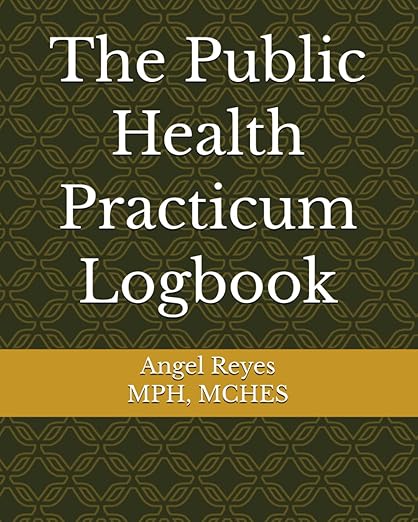
Stop Scrambling at the End of Your Practicum
The Public Health Practicum Logbook gives you the structure to track hours, map competencies, and build portfolio-ready evidence—all semester long.
Get Your Copy on AmazonThe job posting mentioned "GIS experience preferred" and you checked the box because you once made a map in an introductory course. Now your practicum supervisor is asking you to geocode 5,000 addresses, perform spatial joins with census data, and create an interactive dashboard showing health outcomes by neighborhood. The gap between your experience and the expectation suddenly feels enormous.
The Growing Importance of Spatial Analysis
Geographic information systems have become foundational to modern public health practice. Understanding where health events occur, how they cluster, and what environmental or social factors correlate with location provides insights that non-spatial analysis cannot reveal.
From tracking infectious disease spread to identifying food deserts, from mapping environmental hazards to analyzing healthcare access, spatial thinking pervades contemporary public health work. Yet most MPH curricula dedicate only a single course, if any, to GIS skills.
Why the Learning Curve Is So Steep
GIS software combines multiple complex skill sets. You need to understand geographic concepts like projections, coordinate systems, and spatial relationships. You must learn software interfaces that differ significantly from typical office applications. You have to manage data in formats you may never have encountered, including shapefiles, geodatabases, and raster images. And you need to apply cartographic principles to create maps that communicate effectively.
Each of these areas could be its own course. Compressing them into a single semester, or trying to learn them on the fly during practicum, creates inevitable struggles.
Common Practicum GIS Challenges
Students frequently encounter several specific challenges. Geocoding, converting addresses to map coordinates, often fails partially, requiring manual intervention for addresses the software can't match. Joining health data to geographic boundaries requires understanding key fields and dealing with mismatched identifiers. Creating maps that look professional rather than default-ugly demands cartographic knowledge that technical training often skips.
The software itself presents obstacles. ArcGIS Pro has a steep learning curve and expensive licensing that your organization may or may not have. QGIS is free but has its own quirks and less intuitive workflows. Web-based tools like ArcGIS Online or Mapbox have limitations that become apparent only when you try to do something slightly beyond basic.
Strategies for Efficient Learning
When facing a GIS learning curve during practicum, focus your efforts strategically.
Start by identifying exactly what you need to accomplish. Rather than trying to learn "GIS," determine the specific operations your project requires. Do you need to make a choropleth map? Perform a buffer analysis? Create a story map? Targeted learning is more efficient than comprehensive study.
Next, find resources matched to your software. Tutorials for ArcMap won't help if you're using ArcGIS Pro, and QGIS instructions differ significantly from ESRI products. Verify that any tutorial matches your actual software and version.
Leverage your university's resources. Many institutions provide ESRI software licenses, and some have GIS labs with staff who can answer questions. Your library may have access to LinkedIn Learning courses or other training platforms with GIS content.
Consider reaching out to your program's GIS instructor, even if you're not currently enrolled in their course. Most faculty are happy to point students toward resources or answer quick questions about real-world applications.
Free Learning Resources Worth Your Time
Several free resources can accelerate your learning. ESRI offers free courses through their training website that cover both software operation and geographic concepts. QGIS has extensive documentation and an active user community with forums where you can search for solutions to specific problems.
YouTube tutorials, while variable in quality, can walk you through specific operations step by step. Search for exactly what you're trying to do rather than general introductory content.
The Penn State open courseware for GIS provides conceptual foundations that help everything else make more sense, even if you don't work through all the exercises.
Managing Expectations with Your Preceptor
Be transparent about your skill level and learning timeline. If you've never used the software your organization has, say so early. Propose a realistic timeline that includes learning time, not just production time.
Many preceptors underestimate how long GIS tasks take, especially for beginners. A map that seems simple might require hours of data preparation, troubleshooting, and iteration. Setting realistic expectations protects both your sanity and your professional reputation.
Building Toward Career Readiness
The GIS skills you develop during practicum can significantly enhance your employability. Spatial analysis capabilities appear in job postings across public health sectors, from epidemiology to health policy to community health.
Consider documenting your learning process and saving examples of your work for your portfolio. Even imperfect early maps demonstrate growth when paired with later, more polished products.
The steep learning curve of GIS software is real, but it's also surmountable. Thousands of public health professionals have climbed it before you, and the view from the other side, being able to create compelling spatial analyses that inform health decisions, makes the climb worthwhile.
Graduate School Success Video Series
Complement your learning with our free YouTube playlist covering essential strategies for thriving in your MPH program and beyond.
Watch the PlaylistFor more graduate school resources, visit Subthesis.com